
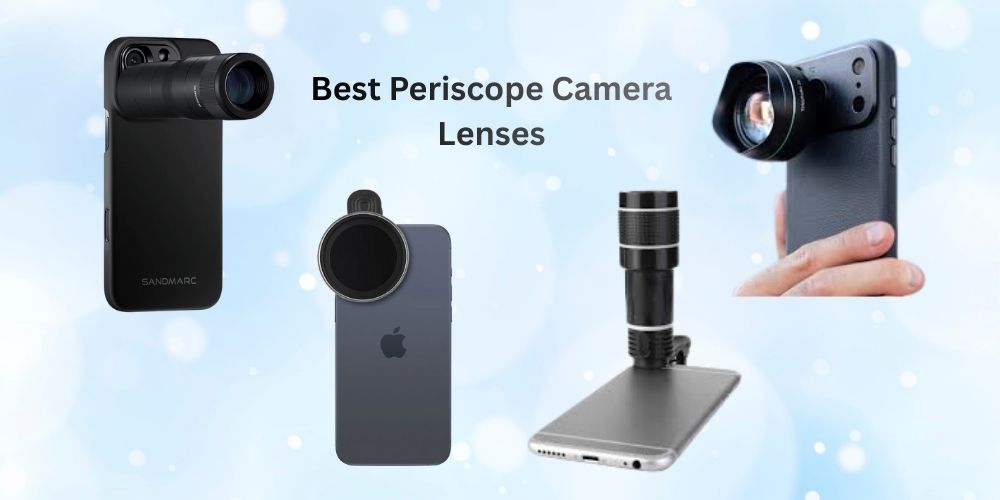
Smartphone photography has reached unprecedented heights in 2026, with periscope camera lenses leading this revolutionary transformation. Gone are the days when capturing distant subjects meant grainy, pixelated images or carrying bulky telephoto equipment. Today’s periscope lenses use ingenious folded optics to deliver professional-grade zoom capabilities in devices slim enough to slip into your pocket. These technological marvels employ prisms and mirrors to bend light at 90-degree angles, allowing focal lengths that would otherwise require impossibly thick phones. The result? Optical zoom ranging from 3x to 10x, with some devices pushing even further through hybrid technology. Whether you’re photographing wildlife, capturing architectural details, or shooting portraits with beautiful background compression, periscope cameras have democratised telephoto photography for millions of users worldwide.
In this comprehensive guide, we’ll explore the eight best periscope camera lenses available, examining their specifications, real-world performance, and unique innovations to help you choose the perfect device for your photography needs.
Understanding Periscope Camera Technology
Traditional smartphone cameras face a significant challenge: achieving high optical zoom requires a long focal length, which would normally make phones impractically thick. Periscope lenses solve this problem through an ingenious design innovation. The technology works by using a prism or mirror positioned at a 90-degree angle to redirect light horizontally through the phone’s body rather than vertically through its thickness. This folded optical path allows manufacturers to achieve extended focal lengths without increasing device thickness. The light enters through the external lens, bounces off the prism, travels horizontally through a series of lens elements arranged along the phone’s width or length, and finally reaches the image sensor.
This architectural approach has enabled smartphones to achieve optical zoom ratios that were once impossible, with modern devices offering anywhere from 3x to 10x optical zoom and even higher hybrid zoom capabilities. The technology addresses one of the most persistent limitations in smartphone photography, allowing users to capture distant subjects with clarity and detail that rivals traditional cameras.
The Evolution of Periscope Camera Lenses
The journey of periscope lenses in smartphones began in 2019 when Huawei introduced the technology in the P30 Pro. This pioneering device featured a 5x optical zoom periscope lens that demonstrated the viability of folded optics in consumer smartphones. Since then, the technology has evolved rapidly, with manufacturers competing to push the boundaries of what’s possible.
The evolution has seen improvements in several key areas: sensor size has increased dramatically, with modern periscope cameras using sensors as large as 1/1.4 inches; pixel counts have skyrocketed, with 200-megapixel periscope sensors now available; aperture sizes have improved for better low-light performance; and optical image stabilisation has become standard, ensuring sharp images even at maximum zoom.
The Top 8 Periscope Camera Lenses
1. Vivo X100 Ultra: The 200MP Telephoto Pioneer
The Vivo X100 Ultra stands as a testament to how far periscope camera technology has advanced. At the heart of this device lies an extraordinary 200-megapixel periscope telephoto camera that utilises Samsung’s ISOCELL HP9 sensor, measuring a substantial 1/1.4 inches, the largest telephoto sensor ever fitted to a smartphone. This impressive sensor pairs with an 85mm equivalent focal length lens featuring an f/2.67 aperture, delivering 3.7x optical zoom compared to the main camera. The lens construction incorporates FCD100, an advanced low-dispersion material typically reserved for professional cameras, and benefits from Zeiss T* coating and Zeiss APO certification. These premium optical elements work together to minimise chromatic aberration and improve clarity, particularly at contrast edges.
The X100 Ultra’s periscope system offers 20% improved light sensitivity compared to its predecessor and supports telephoto macro mode with up to 20x magnification. The camera can capture genuine 200-megapixel photos, though it also supports pixel binning to 50 megapixels or 12.5 megapixels for improved low-light performance and faster processing.
Beyond raw specifications, the X100 Ultra excels in real-world performance. The large sensor enables exceptional detail capture even in challenging lighting conditions, while the advanced coatings help control lens flare and maintain image purity when shooting in bright sunlight or backlit scenarios. The device’s computational photography algorithms, powered by Vivo’s Blueprint Image Chip V3+, further enhance the telephoto experience by improving dynamic range and detail preservation.
2. Xiaomi 15 Ultra: The Leica-Engineered Masterpiece
The Xiaomi 15 Ultra represents the pinnacle of smartphone photography in 2026, featuring a sophisticated quad-camera system co-engineered with legendary optics manufacturer Leica. The standout feature is its 200-megapixel periscope telephoto camera, which utilises the same Samsung HP9 sensor found in the Vivo X100 Ultra but with Xiaomi’s unique implementation and Leica’s optical expertise. This periscope lens offers a 100mm equivalent focal length with an f/2.6 aperture and optical image stabilisation. What sets the Xiaomi 15 Ultra apart is its innovative in-sensor zoom (ISZ) technology, which provides lossless output at multiple focal lengths, including 200mm and 400mm. The system supports an impressive array of zoom magnifications: 0.6x, 1x, 2x, 3x, 4.3x, 8.7x, and 17.3x, offering photographers incredible compositional flexibility.
The Leica partnership brings more than just branding it delivers genuine optical improvements through the “Leica Ultra-Pure Optical System.” This system enhances image clarity and light intake while maintaining Leica’s characteristic rendering quality. Users can choose between two distinct photographic styles: Leica Authentic Look, which delivers more natural, muted tones reminiscent of traditional Leica film cameras, and Leica Vibrant Look, which offers more saturated, contemporary colours.
The periscope camera’s performance in low-light conditions is particularly impressive. The large 1/1.4-inch sensor with its advanced pixel-binning technology enables detailed telephoto shots even in dark environments. Independent testing has shown that the Xiaomi 15 Ultra achieves the best tele-zoom performance to date, with exceptional detail preservation across all zoom ranges, from the primary camera to long-range telephoto.
3. iPhone 16 Pro Max: Apple’s Tetraprism Innovation
Apple’s approach to periscope camera technology differs from its Android competitors, both in naming convention and optical design. The iPhone 16 Pro Max features what Apple calls a “tetraprism” telephoto camera, essentially a periscope lens that uses four prisms to fold the optical path. This 12-megapixel telephoto camera offers 5x optical zoom with a 120mm equivalent focal length and an f/2.8 aperture. While the megapixel count might seem modest compared to the 200-megapixel sensors from Vivo and Xiaomi, Apple’s approach prioritises image quality over raw resolution. The tetraprism design features seven lens elements and incorporates 3D sensor-shift optical image stabilisation combined with autofocus, delivering exceptional stability for handheld telephoto photography.
Jon McCormack, Apple’s VP of camera software engineering, explained the company’s philosophy: the 5x zoom represents something that can be stabilised incredibly well, ensuring users can consistently capture sharp images without a tripod. This practical approach reflects Apple’s emphasis on reliability and consistency over spec-sheet numbers.
The iPhone 16 Pro Max’s tetraprism camera integrates seamlessly with Apple’s computational photography ecosystem, including Smart HDR, Deep Fusion, and Photonic Engine. These technologies work together to enhance detail, reduce noise, and optimise dynamic range in telephoto images. The system can also record video at up to 4K resolution with exceptional stabilisation, making it ideal for both photography and videography. What’s particularly noteworthy about the iPhone 16 generation is that Apple extended the tetraprism technology to both Pro models. The iPhone 16 Pro also features the same 5x optical zoom capability, democratising this advanced feature across the Pro lineup rather than reserving it exclusively for the Max model.
4. Samsung Galaxy S25 Ultra: The AI-Enhanced Zoom King
Samsung’s Galaxy S25 Ultra continues the company’s legacy as a pioneer in smartphone zoom technology. The device features a 50-megapixel periscope telephoto camera with 5x optical zoom and optical image stabilisation, enhanced by Samsung’s sophisticated AI-backed scene optimisation and detail enhancer algorithms. The Galaxy S25 Ultra’s telephoto system represents years of refinement in Samsung’s periscope camera development, which began with the Galaxy S20 Ultra’s ambitious 48-megapixel periscope lens capable of 10x hybrid zoom. The current generation focuses on balancing optical quality with computational enhancement, using AI to intelligently process telephoto images and extract maximum detail while maintaining natural-looking results.
Samsung’s Pro Visual Engine adds significant computational capabilities to the hardware foundation. This system employs advanced algorithms for low-light zoom shots, enabling users to capture clear, detailed images even when shooting distant subjects in challenging lighting conditions. The AI scene optimizer recognizes various shooting scenarios and automatically adjusts camera settings to achieve optimal results.
The periscope camera works in concert with Samsung’s other telephoto lens—the Galaxy S25 Ultra features a dual telephoto setup with both a 3x and 5x optical zoom lens, providing exceptional flexibility for various shooting distances. This dual-periscope approach ensures users always have the optimal focal length available without compromising image quality through excessive digital zoom.
5. OPPO Find X8 Ultra: The Dual Periscope Pioneer
The OPPO Find X8 Ultra takes a unique approach to periscope camera technology by incorporating not one but two periscope lenses, offering unprecedented versatility in a smartphone camera system. This innovative configuration provides optical zoom at both 3x (73mm) and 6x (125mm) focal lengths, with both lenses featuring optical image stabilisation.
Both periscope telephoto units use 50-megapixel sensors, ensuring high-resolution output across the entire telephoto range. This dual-periscope design eliminates the need for aggressive digital zoom between focal lengths, as users can select either the 3x or 6x optical zoom depending on their subject distance. The system can achieve up to 60x digital zoom capability, though image quality naturally decreases at extreme magnifications.
OPPO’s HyperTone Camera System enhances the hardware with advanced computational photography features. The system includes a dedicated cinematic mode that applies professional colour grading and aspect ratios to video footage, along with steadicam operation that provides gimbal-like stabilisation for smooth video capture. These features make the Find X8 Ultra particularly appealing for content creators who prioritise video capabilities alongside still photography. The Find X8 Ultra also includes a camera button similar to traditional cameras, enabling instant capture, continuous shooting, and intuitive zoom control through swipe gestures. This physical control adds a tactile element to the photography experience that many enthusiasts appreciate, making the phone feel more like a dedicated camera.
6. Nothing Phone 3a Pro: The Accessible Periscope Option
The Nothing Phone 3a Pro represents an important development in periscope camera technology: bringing this advanced feature to a more affordable price point. As the cheapest phone with a periscope camera on our list, it demonstrates that folded optics are no longer exclusive to ultra-premium flagships. The device features a 50-megapixel Sony LYT-600 periscope sensor with a 1/1.95-inch size and 50mm focal length, offering 3x optical zoom. The lens includes optical image stabilisation for shake-free shooting and supports 6x lossless zoom along with up to 60x ultra zoom using digital magnification.
While the Nothing Phone 3a Pro’s periscope specifications aren’t as impressive as flagship offerings, the camera still delivers solid performance for everyday telephoto photography. The Sony LYT-600 sensor provides good dynamic range and colour reproduction, making it suitable for portraits, landscape details, and general zoom photography needs.
Beyond the camera, the Nothing Phone 3a Pro distinguishes itself with the company’s signature transparent design and LED Glyph lights, creating a unique aesthetic identity. The device also includes an “Essential Key” button that can perform various tasks with on-screen content, adding functional versatility. Powered by a Snapdragon 7s Gen 3 processor and featuring a 5,000mAh battery with 50W fast charging, it offers respectable overall performance to complement its photography capabilities.
7. Google Pixel 9 Pro: The AI Photography Powerhouse
The Google Pixel 9 Pro brings Google’s renowned computational photography expertise to periscope camera technology. The device features a 48-megapixel periscope telephoto sensor capable of 10x optical zoom, extending to 30x with Super Res Zoom technology that uses multi-frame processing and machine learning to maintain detail even at high magnifications. What sets the Pixel 9 Pro apart isn’t just its hardware, it’s the sophisticated AI enhancements and software features that Google has developed over years of computational photography research. The telephoto camera benefits from features like Magic Eraser, Best Take, Photo Unblur, and Night Sight, all of which work seamlessly with the periscope lens to ensure optimal image quality in various shooting conditions.
The Pixel 9 Pro’s telephoto camera can also be used for zoomed-in video recording up to 20x magnification, thanks to advanced processing that maintains stability and clarity. The device supports up to 8K video recording, though most users will find 4K recording with the telephoto lens more practical for everyday use.
Google’s approach to periscope photography emphasises making great shots effortless through AI. The camera automatically optimises exposure, colour, and detail based on scene analysis, while features like astronomical photography mode enable users to capture detailed images of the night sky, including stars and celestial objects that would be invisible to the naked eye. The Pixel 9 Pro is powered by Google’s Tensor G4 chip, which includes specialised machine learning accelerators designed specifically for photography tasks. This dedicated hardware enables real-time processing of computational photography features, ensuring that AI enhancements don’t slow down the shooting experience.
8. Sony Xperia 1 V: The True Zoom Lens
While most smartphones use fixed periscope lenses at specific focal lengths and rely on digital zoom between them, the Sony Xperia 1 V takes a different approach. This device features a true continuous optical zoom lens that can smoothly adjust between 3.5x and 5.2x magnification without switching sensors or relying on digital interpolation. This continuous zoom functionality is achieved through a moving lens element system within the periscope assembly, a significantly more complex and expensive engineering solution than fixed focal length designs. The benefit is smooth, stepless zoom similar to what photographers expect from traditional cameras, without the image quality degradation that typically accompanies digital zoom.
The Xperia 1 V’s periscope camera uses a 12-megapixel sensor, focusing on image quality rather than high resolution. Sony’s background in professional camera manufacturing through its Alpha mirrorless camera division informs the Xperia’s photography features, including professional-level manual controls, eye-tracking autofocus, and a dedicated Photography Pro app that mimics the interface of Sony’s Alpha cameras. The device also features a stunning 4K HDR OLED display that’s calibrated for accurate colour reproduction, making it ideal for photographers who want to review and edit their images on the phone. Unlike most competitors, the Xperia 1 V includes microSD card support, allowing photographers to expand storage for their high-quality images and 4K video footage.
The Science Behind Periscope Camera Lenses Performance
Understanding the technical aspects of periscope camera performance helps explain why certain specifications matter more than others. Several key factors determine the quality of images captured with these folded optical systems.
Sensor Size:
- The physical dimensions of the image sensor significantly impact image quality. Larger sensors capture more light per pixel, resulting in better low-light performance, improved dynamic range, and reduced noise. The current trend toward 1/1.4-inch sensors in flagship periscopes represents a substantial improvement over earlier generations that used smaller 1/2.5-inch or 1/3-inch sensors.
Aperture:
- The lens aperture, expressed as an f-number, determines how much light reaches the sensor. Lower f-numbers indicate larger apertures that gather more light. However, achieving large apertures in periscope lenses is challenging due to the constrained space within the phone body. Most periscope lenses feature apertures between f/2.5 and f/2.8, though some achieve f/2.6 or better.
Pixel Binning:
- Many high-megapixel periscope sensors use pixel binning technology, which combines data from multiple adjacent pixels to create one larger “super pixel.” A 200-megapixel sensor might use 4×4 binning to produce 12.5-megapixel images with improved light gathering and reduced noise. This flexibility allows the same sensor to produce ultra-high-resolution images in good light or cleaner, lower-resolution images in challenging conditions.
Optical Image Stabilisation:
- Telephoto photography amplifies camera shake, making stabilisation crucial. Modern periscope lenses incorporate sophisticated OIS systems that can compensate for movement in multiple axes. Some implementations, like Apple’s sensor-shift stabilisation, move the entire sensor rather than just the lens elements, providing even more effective shake correction.
Focal Length Considerations:
- The relationship between sensor size, focal length, and zoom magnification is complex. Manufacturers must balance these factors within the physical constraints of a smartphone body. Current technology appears to max out around 1/1.4-inch sensors for 4x zoom or 1/2-inch sensors for 5-6x zoom before the periscope assembly becomes too large to fit comfortably in a phone.
Practical Applications and Use Cases
Periscope camera lenses excel in numerous real-world photography scenarios that were previously challenging or impossible with smartphones.
Portrait Photography:
- The longer focal length of periscope lenses (typically equivalent to 70-135mm in full-frame terms) is ideal for portrait photography. This range provides a flattering perspective, natural background compression, and a comfortable working distance from subjects. The relatively large apertures also enable pleasant background blur when photographing people.
Wildlife and Nature Photography:
- The ability to zoom in on distant subjects without approaching them makes periscope lenses valuable for wildlife photography. Birds, animals, and other subjects that might flee from close approach can be captured with impressive detail. The long reach also proves useful for landscape photography when isolating distant features or compressing depth in mountain scenes.
Sports and Action:
- Periscope cameras enable smartphone users to capture sports action, concerts, and performances from audience seating positions. The stabilisation systems help maintain sharpness even when tracking moving subjects, while fast autofocus keeps athletes and performers in focus throughout dynamic sequences.
Architectural Details:
- The telephoto perspective of periscope lenses minimises perspective distortion, making them excellent for photographing buildings and architectural details. The ability to zoom in on specific elements from a distance allows photographers to isolate interesting patterns, textures, and design elements without the converging verticals that plague wide-angle shots of buildings.
Street Photography:
- Many photographers appreciate the discretion that telephoto lenses provide for street photography. The ability to capture candid moments from a comfortable distance, combined with the flattering perspective of longer focal lengths, makes periscope cameras valuable tools for documenting urban life and human moments.
The Future of Periscope Camera Lenses Technology
The rapid evolution of periscope camera technology shows no signs of slowing. Several emerging trends and innovations promise to further enhance smartphone telephoto photography.
Larger Sensors:
- Manufacturers continue pushing toward even larger sensors in periscope assemblies. While current flagship devices use 1/1.4-inch sensors, there’s theoretical room for growth toward 1-inch sensors, though this would require advances in miniaturisation and optical engineering.
Variable Aperture:
- Some manufacturers are experimenting with variable aperture systems in periscope lenses, allowing photographers to adjust the lens opening for creative control over depth of field and light gathering. While this adds complexity and cost, it provides flexibility similar to traditional cameras.
Liquid Lens Technology:
- Emerging liquid lens technology, where voltage changes alter the lens shape, could enable faster focus adjustments and potentially variable focal lengths without moving mechanical parts. This technology promises more reliable operation and potentially longer focal length ranges in the same physical space.
Multiple Periscope Systems:
- As demonstrated by the OPPO Find X8 Ultra, some manufacturers are incorporating multiple periscope lenses at different focal lengths. This trend may continue, with future devices potentially offering three or more periscope lenses to cover the entire telephoto range without digital interpolation.
Improved Computational Photography:
- Advances in AI and computational photography will continue enhancing the output from periscope cameras. Future systems may offer even better night photography, improved zoom beyond optical limits, and more sophisticated image processing that rivals or exceeds dedicated camera systems.
Enhanced Stabilisation:
- Future periscope cameras may incorporate even more advanced stabilisation systems, possibly including gimbal-like mechanisms within the phone body or AI-powered stabilisation that anticipates movement patterns to provide smoother video and sharper images.
Choosing the Right Periscope Camera Lenses
Selecting a smartphone with a periscope camera lenses depends on your specific photography needs, budget, and ecosystem preferences.
For Ultimate Image Quality:
The Vivo X100 Ultra and Xiaomi 15 Ultra offer the most advanced periscope camera hardware available, with 200-megapixel sensors, large apertures, and premium optical elements. These devices represent the current pinnacle of smartphone telephoto photography.
For Ecosystem Integration:
If you’re invested in the Apple ecosystem, the iPhone 16 Pro Max delivers excellent periscope performance with seamless integration into iCloud, Apple Photos, and other Apple services. The tetraprism camera may not match Android flagships on specifications, but it provides reliable, consistent performance.
For Versatility:
The OPPO Find X8 Ultra’s dual periscope system offers the most flexibility, with true optical zoom at both 3x and 6x magnifications. This configuration provides optimal image quality across a wider range of focal lengths than single periscope designs.
For Computational Photography:
The Google Pixel 9 Pro leverages Google’s AI expertise to extract maximum detail and quality from its periscope sensor through sophisticated computational techniques. If you prioritise ease of use and AI-enhanced results over manual control, the Pixel represents an excellent choice.
For Professional Features:
The Sony Xperia 1 V appeals to photographers who want professional-level control and a true continuous zoom lens. Its camera-like interface and manual controls make it ideal for enthusiasts familiar with traditional photography.
For Value:
The Nothing Phone 3a Pro demonstrates that periscope camera technology is becoming more accessible. While not matching flagship performance, it offers solid telephoto capabilities at a significantly lower price point.
Conclusion
Periscope camera technology has transformed smartphone photography, enabling optical zoom capabilities that seemed impossible just a few years ago. The eight periscope camera lenses featured in this guide represent the current state of the art, each offering unique advantages for different users and use cases. The Vivo X100 Ultra and Xiaomi 15 Ultra push the boundaries with their 200-megapixel sensors and advanced optics, delivering unprecedented detail in telephoto images. The iPhone 16 Pro Max brings Apple’s refined approach to the technology with its tetraprism design and computational photography integration. Samsung’s Galaxy S25 Ultra leverages AI enhancement to maximise performance, while OPPO’s dual periscope system offers unmatched focal length flexibility.
Google’s Pixel 9 Pro demonstrates how computational photography can enhance periscope camera output, the Sony Xperia 1 V provides professional-level control with true continuous zoom, and the Nothing Phone 3a Pro proves that periscope technology is becoming more widely accessible across price points. As this technology continues to evolve, we can expect even more impressive developments in the coming years. Larger sensors, improved stabilisation, variable aperture systems, and enhanced computational photography will further close the gap between smartphone cameras and dedicated photography equipment. For now, these periscope camera lenses represent the best options available, each capable of capturing stunning telephoto images that would have been impossible with smartphones just a generation ago.
People May Ask
1. What is a periscope camera lens in smartphones?
A periscope lens uses prisms to redirect light horizontally through the phone, enabling longer optical zoom without increasing device thickness, typically offering 3x to 10x magnification.
2. How does a periscope lens differ from a regular telephoto lens?
Periscope lenses fold the optical path at 90 degrees using prisms, allowing longer focal lengths. Regular telephoto lenses are oriented vertically, limiting zoom capabilities in thin smartphones.
3. Which smartphone has the best periscope camera in 2026?
The Vivo X100 Ultra and Xiaomi 15 Ultra lead with 200-megapixel sensors and superior optics, though the iPhone 16 Pro Max offers excellent reliability and ecosystem integration.
4. Can periscope cameras take good photos in low light?
Yes, modern periscope cameras with large sensors (1/1.4-inch) and wide apertures (f/2.6-f/2.8) perform well in low light, especially when using pixel binning technology for enhanced sensitivity.
5. Are periscope camera phones worth the extra cost?
If you frequently photograph distant subjects, wildlife, sports, or need versatile zoom capabilities, periscope cameras significantly enhance smartphone photography and justify the premium pricing.