
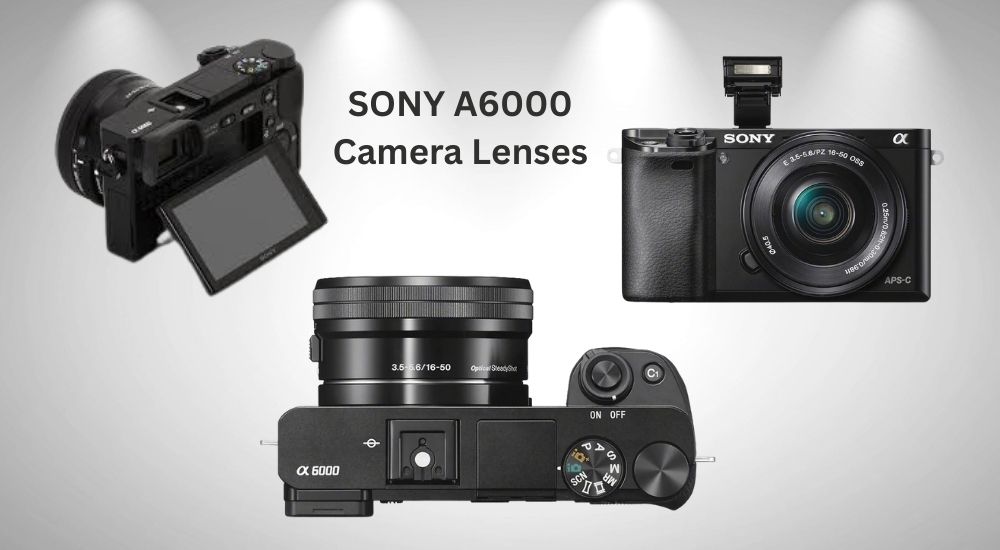
Choosing the right lens for your Sony A6000 can feel a bit like choosing the right tyres for a sports car. The body is powerful, fast, and reliable, but without the right glass in front of it, you will never unlock its full potential. We have extensively worked with the Sony A6000 and know that the right lens can significantly transform its performance in real-world photography. From tack-sharp portraits to sweeping landscapes and fast-moving action, the lens you choose defines your results. In this guide, we break down the 8 best Sony A6000 camera lenses that consistently deliver outstanding image quality, reliable autofocus, and excellent value. This article is written for photographers in the USA who want practical buying advice, not vague recommendations. Whether you are upgrading from the kit lens or building a professional APS-C setup, this guide will help you make an informed investment.
Why Choosing the Right Camera Lenses for the Sony A6000 Matters
The Sony A6000 may be an older mirrorless camera, but it remains one of the most capable APS-C cameras ever made. Its fast autofocus system, lightweight body, and 24.3MP sensor make it ideal for both beginners and enthusiasts. However, the lens determines how much of that capability you actually use. A sharp lens can make images appear almost three-dimensional, while a poor lens can render even the best camera’s images average.
We often see photographers blame the camera when images look soft or uninspiring. In reality, the lens is usually the limiting factor. A high-quality lens improves sharpness, colour accuracy, contrast, and low-light performance. It also changes how you shoot. A fast prime lens encourages creativity with depth of field, while a telephoto zoom opens doors to wildlife and sports photography. Choosing the right lens is not about buying the most expensive option; it is about matching the lens to your shooting style.
Understanding the Sony E-Mount System
Sony’s E-mount system is one of the most versatile mirrorless mounts available today. The Sony A6000 uses an APS-C sensor, which means lenses designed for full-frame E-mount cameras will also work, though with a crop factor applied. This flexibility gives photographers access to a massive ecosystem of Sony, Sigma, Tamron, and third-party lenses.
APS-C Sensor Advantages:
The APS-C sensor offers an excellent balance between image quality and portability. Lenses designed for APS-C are typically smaller, lighter, and more affordable than full-frame alternatives. This makes the Sony A6000 an ideal travel and everyday photography camera.
Crop Factor:
The Sony A6000 has a 1.5x crop factor. A 30mm lens, for example, behaves like a 45mm lens in full-frame terms. Understanding this is crucial when choosing lenses, especially for wide-angle or portrait photography. We take this crop factor into account in every recommendation below.
How We Selected the Best Sony A6000 Camera Lenses
We selected these lenses based on real-world performance, not just specifications. Our focus was on image quality, autofocus reliability, build quality, and overall value for photographers in the USA. We also considered how each lens performs in everyday shooting situations, from family photos to professional work.
Key Selection Criteria:
- Sharpness and image clarity.
- Autofocus speed and accuracy.
- Optical stabilisation where applicable.
- Build quality and durability.
- Price-to-performance ratio.
Best Overall Lens for Sony A6000
Sony E 18–105mm f/4 G OSS

The Sony E 18–105mm f/4 G OSS is an excellent match for the A6000, providing a versatile 27–157.5mm equivalent focal range that covers wide-angle to telephoto needs. Its constant f/4 aperture maintains consistent brightness throughout the zoom range, while the built-in Optical SteadyShot compensates for the A6000’s lack of in-body stabilisation. The lens’s G-series optics deliver sharp, high-contrast images with minimal chromatic aberration. Its internal focusing motor works seamlessly with the A6000’s fast hybrid autofocus system, and the power zoom function makes it ideal for video recording. This all-in-one lens is perfect for travel, events, and everyday photography on the A6000.
Build Quality and Handling:
This lens feels solid and professional. The power zoom mechanism is smooth and especially useful for video shooters. Optical SteadyShot stabilisation helps keep images sharp, even at longer focal lengths or in low light.
Real-World Performance:
In real-world use, this lens delivers consistent sharpness across the frame. Colours are vibrant, contrast is strong, and distortion is well-controlled. For photographers who want one lens to handle most situations, this is the most reliable choice.
Best Prime Lens for Low Light Photography
Sigma 30mm f/1.4 DC DN

The Sigma 30mm f/1.4 DC DN is a superb prime lens for the Sony A6000, offering a versatile 45mm equivalent focal length perfect for street photography, portraits, and everyday shooting. Its fast f/1.4 aperture enables beautiful background blur and excellent low-light performance, compensating for the A6000’s modest ISO capabilities. The lens delivers exceptional sharpness even wide open, with minimal distortion and vignetting. Its compact, lightweight design complements the A6000’s portability, while the stepping motor provides quick, silent autofocus ideal for both stills and video. At its price point, this lens offers outstanding optical quality and represents excellent value for A6000 users.
Low-Light Strengths:
With its wide aperture, this lens allows more light to hit the sensor, making it ideal for indoor photography, night scenes, and available-light portraits. Noise is reduced, and images remain crisp even in challenging lighting.
Portrait Performance:
At an effective focal length of around 45mm, this lens is perfect for environmental portraits. Backgrounds melt away into smooth bokeh, while subjects remain razor-sharp.
Best Wide-Angle Lens for Landscapes
Sony E 10–18mm f/4 OSS

For landscape and travel photographers, the Sony E 10–18mm f/4 OSS is a must-have lens. The Sony E 10–18mm f/4 OSS is an ultra-wide-angle lens designed specifically for the Sony A6000, delivering a 15–27mm equivalent field of view ideal for landscapes, architecture, and interior photography. Its constant f/4 aperture provides consistent exposure across the zoom range, while built-in Optical SteadyShot stabilisation ensures sharp handheld shots in challenging conditions. The lens’s compact, lightweight construction makes it highly portable, complementing the A6000’s travel-friendly design. It produces sharp images with well-controlled distortion for an ultra-wide lens, and the linear autofocus motor operates quickly and quietly. This lens is essential for A6000 photographers seeking dramatic wide-angle perspectives.
Travel and Landscape Use:
This lens is lightweight and compact, making it ideal for hiking and travel. The constant f/4 aperture ensures consistent exposure across the zoom range.
Distortion Control:
Wide-angle lenses often suffer from distortion, but Sony has done an excellent job correcting this. Straight lines remain straight, making this lens suitable for architecture as well.
Best Telephoto Zoom Lens
Sony E 55–210mm f/4.5–6.3 OSS

The Sony E 55–210mm f/4.5–6.3 OSS is an affordable telephoto zoom for the Sony A6000 camera lenses, providing an 82.5–315mm equivalent reach, perfect for wildlife, sports, and distant subjects. It’s built-in Optical SteadyShot stabilisation helps achieve sharp images when shooting handheld at longer focal lengths, crucial since the A6000 lacks in-body stabilisation. While the variable aperture limits low-light performance, the lens remains compact and lightweight, maintaining excellent portability. Image quality is respectable with good sharpness in the centre, though edges can soften at longer distances. The internal motor delivers reasonably quick autofocus. This lens offers solid value as an entry-level telephoto option for A6000 users.
Wildlife and Sports Use:
With an effective focal length of up to 315mm, this lens brings distant subjects closer. Autofocus is fast enough for casual action photography.
Stabilisation Benefits:
Optical SteadyShot helps reduce camera shake, which is especially important at longer focal lengths.
Best All-in-One Travel Lens
Tamron 18–200mm f/3.5–6.3

The Tamron 18–200mm is designed for photographers who value convenience above all else. This lens eliminates the need to change lenses while travelling. The Tamron 18–200mm f/3.5–6.3 Di III VC is an all-in-one superzoom for the Sony A6000, covering a remarkable 27–300mm equivalent range in a single lens. Its extensive focal length makes it incredibly versatile for travel, eliminating the need for lens changes. The built-in Vibration Compensation helps counteract camera shake across the zoom range, essential for the A6000’s lack of in-body stabilisation. While image quality doesn’t match prime lenses or pro zooms, it delivers acceptable sharpness for everyday photography. The compact design and lightweight construction make it practical for extended shooting. This lens is ideal for A6000 users prioritising convenience and versatility over ultimate optical performance.
Convenience vs Quality:
While it does not match the sharpness of prime lenses, it delivers respectable image quality across a massive zoom range.
Who This Lens Is For:
This lens is ideal for travellers, vloggers, and casual photographers who want flexibility in a single package.
Best Portrait Camera Lenses for Sony A6000
Sony E 50mm f/1.8 OSS
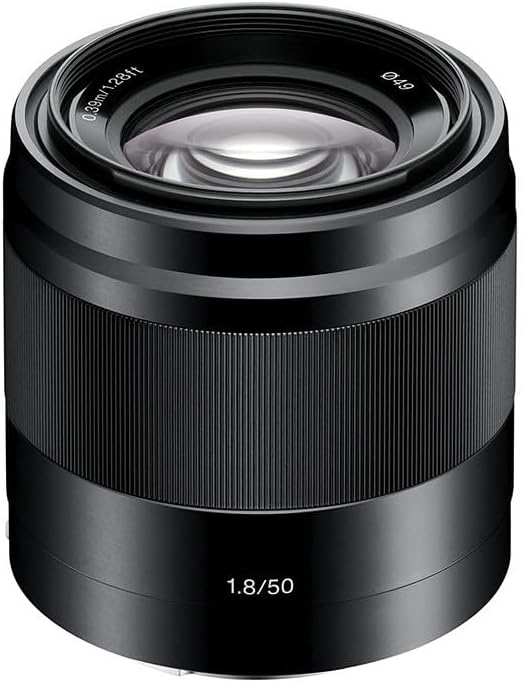
The Sony E 50mm f/1.8 OSS is an excellent portrait lens for the Sony A6000, offering a flattering 75mm equivalent focal length. Its bright f/1.8 aperture enables beautiful background bokeh and superior low-light performance, making it ideal for portraits, events, and indoor photography. The lens delivers sharp images with pleasing contrast, while the built-in Optical SteadyShot provides stabilisation that the A6000’s body lacks. Its compact, lightweight design maintains portability, and the internal autofocus motor operates quickly and quietly for both stills and video. At its affordable price point, this lens is a must-have addition for A6000 photographers seeking professional-quality portraits and creative depth-of-field control.
Bokeh and Sharpness:
This lens produces beautiful background blur and sharp subject separation, making portraits look professional and polished.
Skin Tone Rendering:
Skin tones appear natural and pleasing, which is crucial for portrait work.
Best Budget Lens for Beginners
Sony E 16–50mm f/3.5–5.6 OSS

Often overlooked, the Sony E 16–50mm kit lens is a solid starting point for beginners. The Sony E 16–50mm f/3.5–5.6 OSS is the standard kit lens bundled with the Sony A6000, offering a practical 24–75mm equivalent range for everyday photography. Its retractable pancake design makes it incredibly compact, perfectly complementing the A6000’s portability for travel and casual shooting. Built-in Optical SteadyShot provides stabilisation that helps achieve sharper handheld images. While image quality is decent with good sharpness in favourable lighting, the variable aperture limits low-light performance and background blur capabilities. The autofocus is reasonably quick and quiet. This lens serves as a convenient, lightweight general-purpose option, though serious photographers will eventually want to upgrade to faster, sharper glass.
Kit Lens Reconsidered:
It is compact, lightweight, and surprisingly capable in good lighting conditions.
Learning Photography Basics:
This lens is perfect for learning composition, exposure, and framing without a large investment.
Best Macro Lens for Close-Up Photography
Sony E 30mm f/3.5 Macro
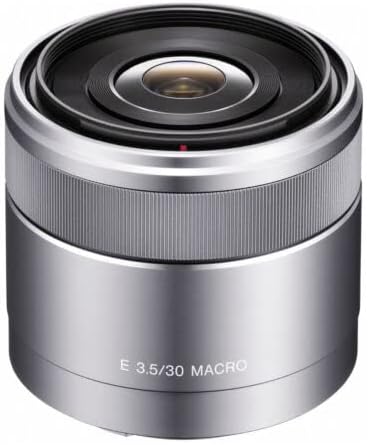
The Sony E 30mm f/3.5 Macro is a specialised close-up lens for the Sony A6000, offering 1:1 magnification at a 45mm equivalent focal length. Its compact, lightweight design makes it highly portable for macro photography of flowers, insects, and small objects. The lens delivers sharp detail and good contrast at close distances, though image quality at normal focusing distances is merely adequate. The built-in LED ring light provides helpful illumination for extreme close-ups, though it’s somewhat dim. Autofocus is slow and can hunt in macro range. This affordable lens is ideal for A6000 users exploring macro photography, though dedicated macro enthusiasts may prefer third-party alternatives.
Product and Nature Photography:
This lens delivers excellent detail and colour accuracy at close distances.
Sharpness at Close Range:
Sharpness remains impressive even at 1:1 magnification, making it perfect for macro work.
Comparison Table of the Best Sony A6000 Camera Lenses
| Lens | Best For | Key Strength |
|---|---|---|
| Sony 18–105mm f/4 | All-around use | Versatility |
| Sigma 30mm f/1.4 | Low light | Sharpness |
| Sony 10–18mm f/4 | Landscapes | Wide angle |
| Sony 55–210mm | Telephoto | Reach |
| Tamron 18–200mm | Travel | Convenience |
| Sony 50mm f/1.8 | Portraits | Bokeh |
| Sony 16–50mm | Beginners | Compact |
| Sony 30mm Macro | Macro | Detail |
Read Also: Discovering the Best Camera Lenses for Nikon D3100
How to Choose the Right Lens Based on Your Photography Style
Selecting the right camera lenses for the Sony A6000 depends on understanding your primary photography interests and shooting conditions. Here’s how to match lenses to different styles:
1: Portrait Photography
Portrait photographers benefit from focal lengths between 50mm and 85mm (on full-frame) or 35mm to 56mm on APS-C cameras like the A6000. Fast apertures of f/1.4 to f/1.8 create beautiful background blur that isolates subjects, while the flattering compression prevents distortion of facial features. Prime lenses typically offer superior sharpness and low-light performance compared to zooms at similar price points.
2: Landscape Photography
Landscape work demands wide-angle lenses, typically ranging from 10mm to 24mm on APS-C sensors. A constant aperture around f/4 provides sufficient depth of field for sharp foreground-to-background rendering. Image stabilisation proves valuable during golden hour shooting when tripods aren’t available. Look for lenses with minimal distortion and excellent corner-to-corner sharpness, as landscapes showcase optical weaknesses more than other genres.
3: Street Photography
Street photographers typically favour compact primes in the 23mm to 35mm range (APS-C equivalent) that providea natural perspective similar to human vision. Fast apertures enable shooting in varied lighting without drawing attention with flash. Lightweight construction encourages all-day carry, while quick, silent autofocus helps capture candid moments. The unobtrusive size of pancake lenses makes them particularly suitable for discrete shooting.
4: Wildlife and Sports
Telephoto lenses starting at 200mm equivalent are essential for distant subjects. Image stabilisation becomes critical at longer focal lengths, where camera shake magnifies significantly. While fast apertures like f/2.8 excel in low light and freeze action, they’re expensive and heavy. Budget-conscious shooters can achieve good results with slower f/5.6 to f/6.3 telephotos in daylight conditions, especially on cameras with capable autofocus systems.
5: Travel Photography
Travel demands versatility and portability. All-in-one zoom lenses covering wide to telephoto ranges eliminate lens changes and reduce luggage weight. While superzoom lenses compromise some optical quality, the convenience often outweighs this limitation. Consider weather-sealed options if travelling to unpredictable climates. A single 18-200mm lens can handle landscapes, portraits, and distant subjects without carrying multiple lenses.
6: Macro Photography
Macro work requires dedicated macro lenses offering 1:1 magnification ratios. Focal lengths between 60mm and 105mm provide comfortable working distances from skittish insects. Ring lights or twin flash systems help illuminate subjects at extreme close-up distances where natural light struggles to reach. Image stabilisation assists with the magnified camera shake inherent in macro photography, though tripods remain essential for optimal sharpness.
7: Video Production
Videographers prioritise smooth, silent autofocus motors and constant apertures that prevent exposure shifts during zooms. Power zoom capabilities enable consistent, controlled zooming. Image stabilisation reduces handheld footage shake, though gimbals provide superior stabilisation for professional work. Avoid lenses with significant focus breathing, where the field of view shifts during focus transitions, as this appears jarring in video.
Consider your budget, shooting frequency, and whether you need one versatile lens or prefer building a specialised collection. Rent lenses before purchasing to ensure they match your workflow and creative vision.
Conclusion
Choosing the right camera lenses for your Sony A6000 is one of the most important decisions you can make as a photographer, because the lens ultimately defines the quality, character, and impact of your images. While the camera body provides the foundation, it is the glass that shapes sharpness, depth, colour, and low-light performance. The lenses discussed in this guide represent the most reliable and high-performing options available for the Sony A6000, covering a wide range of photography styles,s including portraits, landscapes, travel, wildlife, macro, and everyday shooting. By carefully matching a lens to your creative goals, you not only improve technical image quality but also enhance your overall shooting experience. Whether you prioritise versatility, low-light capability, background blur, or convenience, investing in the right lens allows you to unlock the true potential of your Sony A6000 and consistently produce professional-looking results that stand out.
People Also Ask
1. Which lens is best for beginners using the Sony A6000?
The Sony E 16–50mm f/3.5–5.6 OSS is an excellent choice for beginners. It is lightweight, affordable, and versatile, making it ideal for learning composition, exposure, and basic photography techniques without a large investment.
2. What is the best lens for low-light photography on the Sony A6000?
The Sigma 30mm f/1.4 DC DN is widely considered the best low-light lens for the Sony A6000. Its wide aperture allows more light into the sensor, resulting in brighter images with less noise and better background blur.
3. Are full-frame Sony E-mount lenses compatible with the A6000?
Yes, full-frame Sony E-mount lenses are fully compatible with the Sony A6000. However, due to the APS-C sensor, a 1.5x crop factor applies to the effective focal length.
4. Which lens is best for portrait photography with the Sony A6000?
The Sony E 50mm f/1.8 OSS is one of the best portrait lenses for the A6000. It delivers excellent sharpness, pleasing bokeh, and natural skin tones, making portraits look professional.
5. What lens should I choose for travel photography?
For travel photography, the Tamron 18–200mm f/3.5–6.3 is a strong option. Its wide zoom range allows you to capture landscapes, street scenes, and distant subjects without changing lenses.