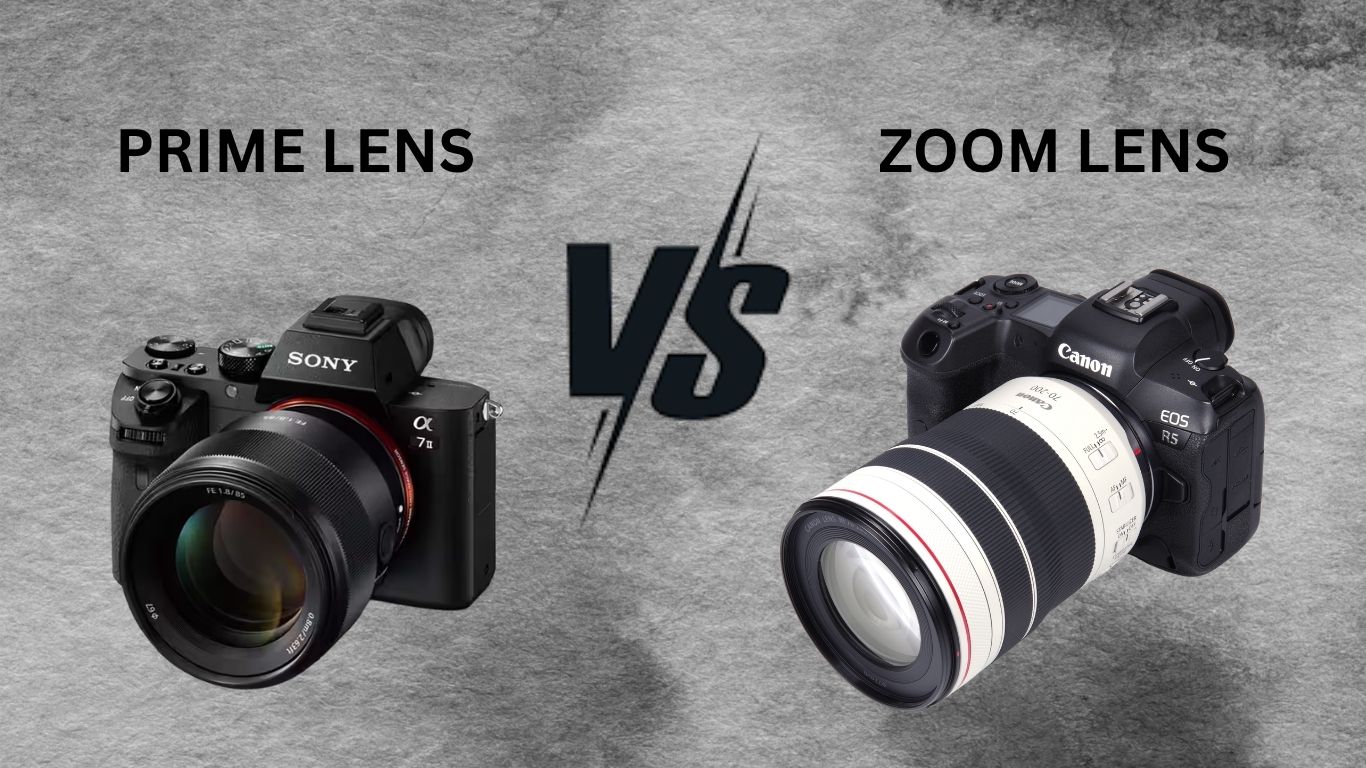
If you’ve spent more than five minutes in a photography forum, you’ve likely stumbled across the prime lens vs zoom lens debate. It’s one of the most searched, most argued, and most misunderstood topics in all of photography, and for good reason. Your lens is arguably more important than your camera body. It determines sharpness, bokeh, low-light performance, and even how you think about and compose a shot.
So, which is better, a prime lens or a zoom lens? The honest answer? It depends. But that’s not a cop-out, it’s the start of a real conversation about your specific photography style, budget, and the types of images you want to create. In this guide, you’ll get a clear breakdown of both lens types, a curated list of the best lenses on the market right now, a detailed buying guide, and an honest verdict. Whether you’re a beginner just starting or an experienced shooter looking to expand your kit, this article will help you make a confident, informed decision.
Quick Answer: Prime lenses offer superior sharpness, wider apertures, and compact size. Zoom lenses offer flexibility and convenience. Neither is universally “better” — the best lens is the one that fits how and what you shoot.
What Is a Prime Lens? What Is a Zoom Lens?
Prime Lens:
A prime lens has a single, fixed focal length, meaning it cannot zoom in or out. If you want to get closer to your subject, you physically move your feet. Common prime lens focal lengths include 24mm, 35mm, 50mm, 85mm, and 135mm.
Because prime lenses have fewer moving optical elements, manufacturers can optimise them heavily for sharpness, contrast, and large maximum apertures (like f/1.2 or f/1.4). This makes prime lenses exceptional for portrait photography, street photography, low-light shooting, and any situation where image quality is the top priority.
Zoom Lens:
A zoom lens covers a range of focal lengths, for example, 24–70mm or 70–200mm. This means you can frame your shot without changing position or swapping lenses. Zoom lenses are workhorses of professional photography because of their versatility.
Modern zoom lenses have improved dramatically in optical quality. Many professional-grade zooms are now sharp enough for commercial work, and some constant-aperture zoom lenses (e.g., f/2.8 throughout the zoom range) can even rival prime lenses in controlled conditions.
Tip: A common beginner mistake is assuming zoom lenses are just “cheaper” versions of prime lenses. High-end professional zoom lenses often cost more than prime lenses and deliver outstanding image quality.
Why Your Choice Between Prime and Zoom Lens Matters
The prime lens vs zoom lens decision shapes more than just your image quality; it shapes your entire shooting workflow, your creative mindset, and even how you grow as a photographer.
- Image quality: Prime lenses generally win on sharpness, contrast, and bokeh at equivalent focal lengths.
- Low-light performance: Prime lenses typically offer wider maximum apertures (f/1.4 vs a zoom’s f/2.8 or f/4), meaning better low-light results and shallower depth of field.
- Creative discipline: Shooting with a fixed focal length forces you to think more intentionally about composition and footwork.
- Versatility: Zoom lenses let you cover events, wildlife, sports, and travel without carrying multiple prime lenses.
- Weight and size: Individual prime lenses are often compact, but carrying three or four primes to replace one zoom quickly adds up in weight.
- Budget: Entry-level prime lenses (like the “nifty fifty”) are among the most affordable, highest-performing lenses you can buy.
Key Features to Consider Before Buying
Before choosing between a prime lens vs zoom lens, evaluate these critical factors:
1. Maximum Aperture (f-stop)
The maximum aperture determines how much light the lens can gather and how blurred the background (bokeh) can be. Prime lenses frequently offer f/1.2 to f/1.8 apertures, while most consumer zoom lenses top out at f/3.5–f/5.6. Professional zoom lenses offer an f/2.8 constant aperture, but at a significantly higher price.
2. Focal Length (or Range)
The focal length determines your angle of view; wider focal lengths (like 24mm) capture more of a scene; longer focal lengths (like 200mm) compress distance and magnify subjects. Match the focal length to your primary shooting scenario: 35mm or 50mm for street and documentary, 85mm or 135mm for portraits, 70–200mm for sports and wildlife.
3. Optical Stabilisation (IS/VR/OSS)
Image stabilisation compensates for camera shake, which becomes important at slower shutter speeds or longer focal lengths. Many modern zoom lenses include stabilisation; fewer prime lenses do, though some cameras offer in-body stabilisation (IBIS).
4. Autofocus Speed and Accuracy
For fast action, wildlife, or event photography, autofocus speed matters enormously. Most modern zoom lenses are optimised for fast, accurate tracking. Prime lenses can vary widely; fast primes for portraits are generally reliable, but some cheaper options lag.
5. Build Quality and Weather Sealing
If you shoot outdoors or in challenging conditions, weather sealing is critical. Professional zoom lenses almost always include weather sealing; prime lens weather sealing varies by price point and manufacturer.
6. Weight and Size
Consider how you’ll carry your gear. A single zoom lens can replace two or three prime lenses, saving bag space and reducing the need to swap lenses in dusty or humid environments.
Top 4 Prime Lenses
These are the top prime lenses across different budgets and use cases. All are widely available on Amazon and offer excellent value for photographers seeking maximum image quality.
1: Canon RF 50mm f/1.8 STM
The Canon RF 50mm f/1.8 STM is one of the best value lenses on the market, period. For portrait photographers and beginners looking to step up from a kit lens, this lens delivers images well above its price point. The background separation at f/1.8 is genuinely beautiful, and the STM autofocus is quick enough for most casual shooting.

Key Features:
- 50mm focal length, classic “nifty fifty” field of view.
- f/1.8 maximum aperture for excellent low-light performance.
- Stepping Motor (STM) for smooth, near-silent autofocus.
- Compact, lightweight design (160g)
- Compatible with all Canon EOS R mirrorless bodies.
- Nano USM for fast subject tracking.
✔ Pros:
- Outstanding sharpness for the price.
- Beautiful background blur.
- Very affordable entry point.
- Compact and travel-friendly.
✘ Cons:
- No weather sealing.
- Plastic build feels less premium.
- Limited to Canon RF mount.
Best For:
Portrait, street, everyday photography, and beginners entering mirrorless systems.
2: Sony FE 85mm f/1.8
The Sony FE 85mm f/1.8 is a portrait photographer’s dream at a non-dream price. The compression it delivers at 85mm, combined with smooth bokeh from the rounded 9-blade aperture, produces professional-quality results. For Sony shooters who want a dedicated portrait lens without spending on the f/1.4 version, this is the smart choice.

Key Features:
- 85mm focal length — ideal portrait compression.
- f/1.8 maximum aperture for creamy bokeh.
- Dual linear autofocus motors for fast, precise tracking.
- Weather-sealed design (dust and moisture resistant)
- Internal focusing — no barrel extension during AF.
- 9-blade rounded aperture for natural bokeh.
✔ Pros:
- Exceptional sharpness, wide open.
- Weather sealed at this price range.
- Fast, reliable autofocus.
- Great for video with eye-tracking.
✘ Cons:
- Sony FE mount only.
- Slight chromatic aberration at f/1.8
- No optical stabilisation.
Best For:
Portrait, wedding, lifestyle photography on Sony Alpha mirrorless systems.
3: Sigma 35mm f/1.4 DG DN Art
Sigma’s Art series continues to punch well above its price class. The 35mm f/1.4 DG DN delivers corner-to-corner sharpness that rivals lenses costing twice as much. If you shoot on Sony or L-mount and want a serious 35mm prime without the first-party premium, this is the benchmark choice.

Key Features:
- 35mm focal length — versatile wide-to-normal perspective.
- f/1.4 maximum aperture for exceptional low-light capability.
- Art series optical formula — designed for maximum resolution.
- Stepping motor for fast, quiet autofocus.
- Available in Sony E and L-mount.
- Dust and splash-proof construction.
✔ Pros
- Razor-sharp across the frame.
- f/1.4 wide aperture.
- Premium build quality.
- Excellent value vs first-party options.
✘ Cons
- Heavier than the other 35mm primes.
- No in-lens stabilisation.
- Limited mount options.
Best For:
Street, documentary, environmental portraits, travel photography.
4: Nikon NIKKOR Z 24mm f/1.8 S
Nikon’s S-line 24mm f/1.8 is a masterclass in wide-angle prime design. Its control over distortion and coma wide open makes it arguably the finest wide-angle prime at this aperture on any mirrorless system. It’s not the cheapest option, but for Nikon Z shooters who demand excellence in landscape and architectural work, it’s worth every cent.

Key Features:
- 24mm focal length — wide-angle with minimal distortion.
- f/1.8 maximum aperture — outstanding for astrophotography.
- S-line optical design with nano-crystal coating.
- Multi-Focus System with two AF groups for fast, accurate focus.
- Weather-sealed, dust and drip-resistant.
- Compact design: only 395g.
✔ Pros
- Minimal lens distortion at 24mm.
- Outstanding corner sharpness.
- Excellent coma control for astro.
- Premium weather sealing.
✘ Cons
- Nikon Z mount only.
- Higher price than competing options.
- No image stabilisation.
Best For:
Architecture, astrophotography, landscapes, and environmental portraits on the Nikon Z system.
Top 4 Zoom Lenses
These zoom lenses represent the best in their respective categories, from budget-friendly, versatile zooms to professional-grade glass used on assignment by working photographers.
1: Sony FE 24–70mm f/2.8 GM II
The Sony GM II 24–70mm is simply one of the finest zoom lenses ever made. Its sharpness at f/2.8 across the full zoom range is staggering; it genuinely competes with dedicated prime lenses in most real-world shooting conditions. For Sony shooters who need a one-lens solution for professional work, this is the gold standard.

Key Features:
- 24–70mm zoom range — the most versatile professional focal range.
- Constant f/2.8 aperture throughout the zoom range.
- Second-generation G Master optics — dramatically improved over the original.
- Dramatically lighter than GM I (695g vs 886g)
- XD linear motors for fast, precise autofocus.
- 11-blade circular aperture for smooth bokeh.
✔ Pros
- Sharpness rivals prime lenses.
- Significantly lighter than predecessors.
- Constant f/2.8 throughout range.
- Outstanding for video and stills.
✘ Cons
- Very high price point.
- Sony FE mount only.
- Still heavier than prime alternatives.
Best For:
Weddings, events, commercial photography, and videographers who need a versatile professional lens.
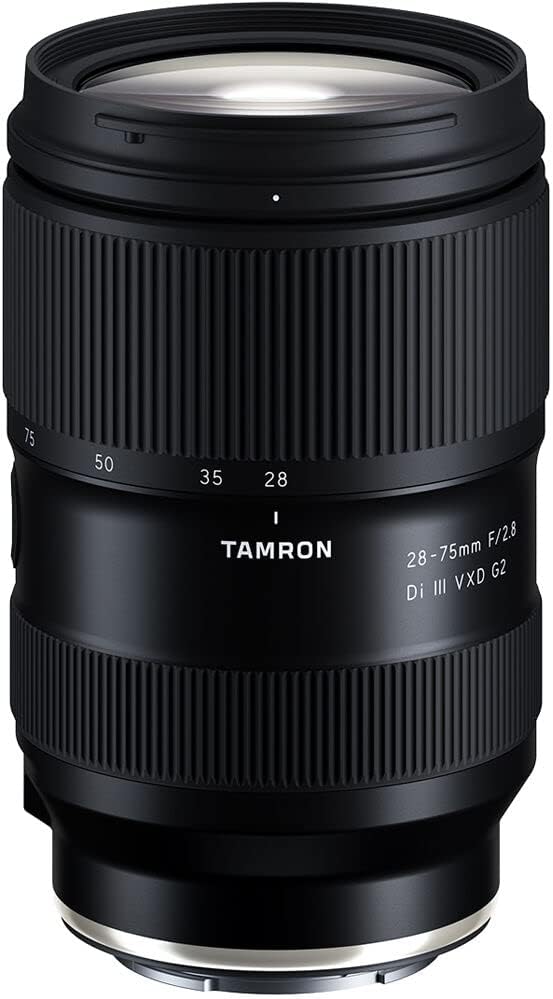
2: Tamron 28–75mm f/2.8 Di III VXD G2
The Tamron 28–75mm G2 continues the brand’s tradition of delivering 90% of first-party performance at 50–60% of the price. Its compact size and minimum focus distance make it uniquely versatile. This is the zoom lens we’d recommend to photographers who want one high-quality walk-around lens for travel and everyday use.
Key Features:
- 28–75mm zoom range — close to the classic 24–70mm versatility.
- Constant f/2.8 aperture — excellent background separation.
- VXD linear motor autofocus — fast and near-silent.
- Compact and lightweight for an f/2.8 zoom (540g)
- Minimum focusing distance of 18cm — macro-like capabilities.
- Available for Sony E and Nikon Z mount.
✔ Pros
- Outstanding value for f/2.8 zoom.
- Impressively compact and light.
- Extremely close minimum focus.
- Fast, reliable autofocus.
✘ Cons
- Slight barrel distortion at 28mm.
- Not quite as sharp as GM II at edges.
- No optical stabilisation.
Best For:
Travel, events, and hybrid shooters who want f/2.8 performance without the premium price tag.
3: Canon RF 70–200mm f/4L IS USM
Canon’s RF 70–200mm f/4L redefined what a telephoto zoom can look like. The collapsible design cuts weight dramatically without compromising optical quality. With 5-stop IS, shooting at 1/60s hand-held at 200mm is genuinely possible. If you don’t need f/2.8 for indoor sports, this is the smarter, lighter, more affordable choice.

Key Features:
- 70–200mm telephoto zoom range — essential for sports and wildlife.
- f/4 constant aperture with 5-stop optical image stabilisation.
- Nano USM autofocus motor — fast and near-silent.
- Unique collapsible design — one of the lightest 70–200mm lenses (1070g)
- L-series build quality with dust and water resistance.
- Air Sphere Coating for reduced ghosting and flare.
✔ Pros
- Astonishingly compact for a 70–200mm.
- 5-stop image stabilisation.
- Professional L-series build.
- Tack-sharp across the zoom range.
✘ Cons
- f/4 (not f/2.8) limits low-light use.
- Canon RF mount only.
- More expensive than a DSLR equivalent.
Best For:
Sports, wildlife, and event photography where reach and stabilisation matter more than maximum aperture.
4: Nikon NIKKOR Z 24–120mm f/4 S
Nikon’s 24–120mm f/4 S is the ideal “one lens to rule them all” for Z-mount shooters. It’s 5x zoom range means you’re covered from landscapes to short telephoto work — and the S-line optics ensure you’re not sacrificing image quality for convenience. It’s Nikon’s answer to “what one lens should I take on holiday?

Key Features:
- 24–120mm zoom range — exceptional versatility in one lens.
- Constant f/4 aperture with 4.5-stop VR image stabilisation.
- S-line optical quality with nano-crystal coating.
- ARNEO coat to suppress reflections from overhead lighting.
- 630g — lightweight for a 5x zoom range.
- Customizable control ring for exposure adjustments.
✔ Pros
- Exceptional 5x zoom range.
- Outstanding sharpness for a zoom.
- Great image stabilisation.
- Versatile for travel, events, and portraits.
✘ Cons
- f/4 limits low-light capability.
- Nikon Z mount only.
- Costs more than a comparable DSLR zoom.
Best For:
Travel, documentary, and event photographers who need one premium lens to cover all situations on Nikon Z.
Comparison Table: Prime Lens vs Zoom Lens — Top Picks at a Glance
| Lens | Type | Focal Length | Max Aperture | Weight | Weather Sealed | Price Range | Rating |
|---|---|---|---|---|---|---|---|
| Canon RF 50mm f/1.8 STM | Prime | 50mm | f/1.8 | 160g | No | $199–$249 | ★ 4.8 |
| Sony FE 85mm f/1.8 | Prime | 85mm | f/1.8 | 371g | Yes | $500–$599 | ★ 4.8 |
| Sigma 35mm f/1.4 Art | Prime | 35mm | f/1.4 | 645g | Yes (splash) | $799–$899 | ★ 4.7 |
| Nikon Z 24mm f/1.8 S | Prime | 24mm | f/1.8 | 395g | Yes | $799–$999 | ★ 4.9 |
| Sony GM II 24–70mm f/2.8 | Zoom | 24–70mm | f/2.8 | 695g | Yes | $2,099–$2,299 | ★ 4.9 |
| Tamron 28–75mm f/2.8 G2 | Zoom | 28–75mm | f/2.8 | 540g | Yes | $729–$799 | ★ 4.7 |
| Canon RF 70–200mm f/4L IS | Zoom | 70–200mm | f/4 | 1,070g | Yes | $1,499–$1,699 | ★ 4.8 |
| Nikon Z 24–120mm f/4 S | Zoom | 24–120mm | f/4 | 630g | Yes | $1,099–$1,299 | ★ 4.8 |
Buying Guide: How to Choose Between a Prime Lens and a Zoom Lens
When deciding between a prime lens vs zoom lens, use this practical framework to match your choice to your actual photography needs, not just spec sheets.
1: Photography Genre
- Portraits, street, and low-light → prime. Sports, wildlife, events, and travel → zoom. Weddings → ideally both.
2: Light Conditions
- If you frequently shoot indoors or at night, a prime lens at f/1.4–f/1.8 gives you a 2–3 stop advantage over most zoom lenses.
3: How You Travel
- Solo travel or carry-on only? One quality zoom beats hauling four prime lenses. Studio or car-based shooting? Primes make more sense.
4: Budget Reality
- A single prime (50mm f/1.8) costs $200 and delivers 90% of the quality of lenses at 5× the price. Entry-level zoom lenses are often compromised; invest in quality if going zoom.
5: Skill Level
- Beginners often benefit from starting with a 50mm prime, it teaches you to see and compose before zoom convenience becomes a crutch.
6: Video vs Stills
- For video, zoom lenses with a constant aperture are invaluable. Zooming during a shot is creative; changing lenses mid-video is not.
Our Honest Recommendations by Shooter Type
- Complete beginner: Start with a 50mm prime (Canon RF 50mm f/1.8 or Nikon Z 40mm f/2). Learn to compose before zooming.
- Portrait photographer: An 85mm prime lens (Sony FE 85mm f/1.8) will give you images your clients will love.
- Travel photographer: The Tamron 28–75mm f/2.8 G2 offers zoom versatility at a reasonable price with great quality.
- Wedding/event photographer: You genuinely need both — a fast prime for reception shots and a 70–200mm zoom for ceremony coverage.
- Wildlife/sports photographer: A quality telephoto zoom lens is non-negotiable. A prime telephoto makes more sense for studio-style wildlife work.
- Hybrid video/photo: A constant f/2.8 zoom (like the Tamron G2) offers the best versatility without lens swapping mid-shoot.
Common Mistakes to Avoid When Choosing a Lens
- Buying a lens for the spec sheet, not your actual shooting style. Many photographers buy a fast f/1.4 prime and shoot it at f/5.6 most of the time. Know how you actually shoot.
- Assuming cheap zoom lenses are comparable to cheap prime lenses. They are not. A $200 50mm prime will outperform a $200 kit zoom in almost every measurable way.
- Overlooking third-party lenses. Sigma, Tamron, and Tokina often deliver 90–95% of first-party optical quality at 50–60% of the price.
- Forgetting about mount compatibility. Not every lens works on every camera body. Always confirm your camera’s mount system before purchasing.
- Ignoring the system you’re invested in. The “best” lens is meaningless if it’s not available for your camera system. Consider the ecosystem, not just individual lenses.
- Buying on impulse after a single impressive sample image. One photographer’s stunning image reflects skill, light, and timing — not just the lens. Read multiple reviews and if possible, rent before buying.
- Choosing a zoom lens “just in case” you need extra reach. If you shoot 90% of the time at one focal length, a prime lens serves you better for sharpness, aperture, and size.
Prime Lens vs Zoom Lens
There’s no universal winner in the prime lens vs zoom lens debate. Prime lenses win in terms of maximum image quality, bokeh, and low-light performance. Zoom lenses win on versatility, convenience, and fewer lens changes. The best photographers understand both tools and choose wisely based on the job at hand.
Frequently Asked Questions
Q1. Is a prime lens better than a zoom lens for beginners?
Yes. Prime lenses teach composition, deliver sharper images, and cost less, making them the ideal starting point for most beginner photographers.
Q2. Do prime lenses produce sharper images than zoom lenses?
Generally yes. Prime lenses have fewer optical elements, allowing greater sharpness and contrast — especially when shooting wide open at maximum aperture.
Q3. Which lens is better for portrait photography — prime or zoom?
A prime lens is better for portraits. The wider aperture creates beautiful background blur, flattering subject separation, and superior skin-tone rendering.
Q4. Are zoom lenses good enough for professional photography?
Absolutely. Modern professional zoom lenses deliver outstanding sharpness and versatility, making them trusted tools for wedding, sports, and commercial photographers worldwide.
Q5. Should I buy a prime lens or zoom lens for travel?
For travel, a zoom lens wins. One versatile lens covers landscapes, portraits, and street scenes — saving weight, space, and constant lens-swapping hassle.
Conclusion: Make the Choice That Serves Your Photography
The prime lens vs zoom lens debate ultimately comes down to this: what kind of photographer are you, and what kinds of images do you want to create? Prime lenses offer unmatched image quality, wider apertures, and creative discipline. Zoom lenses offer convenience, flexibility, and the ability to work across a wide range of shooting situations without changing glass.
For most photographers, the ideal kit eventually includes both a fast prime for when quality and low light matter most, and a quality zoom for when versatility and speed of operation take priority. If you can only start with one, choose based on your primary shooting scenario: portraits and street → prime; events, travel, and action → zoom.
The lenses in this guide represent the best available options across a range of budgets and systems. Use the buying guide and comparison table to narrow down your choice, and don’t hesitate to rent before you invest in an expensive piece of glass.