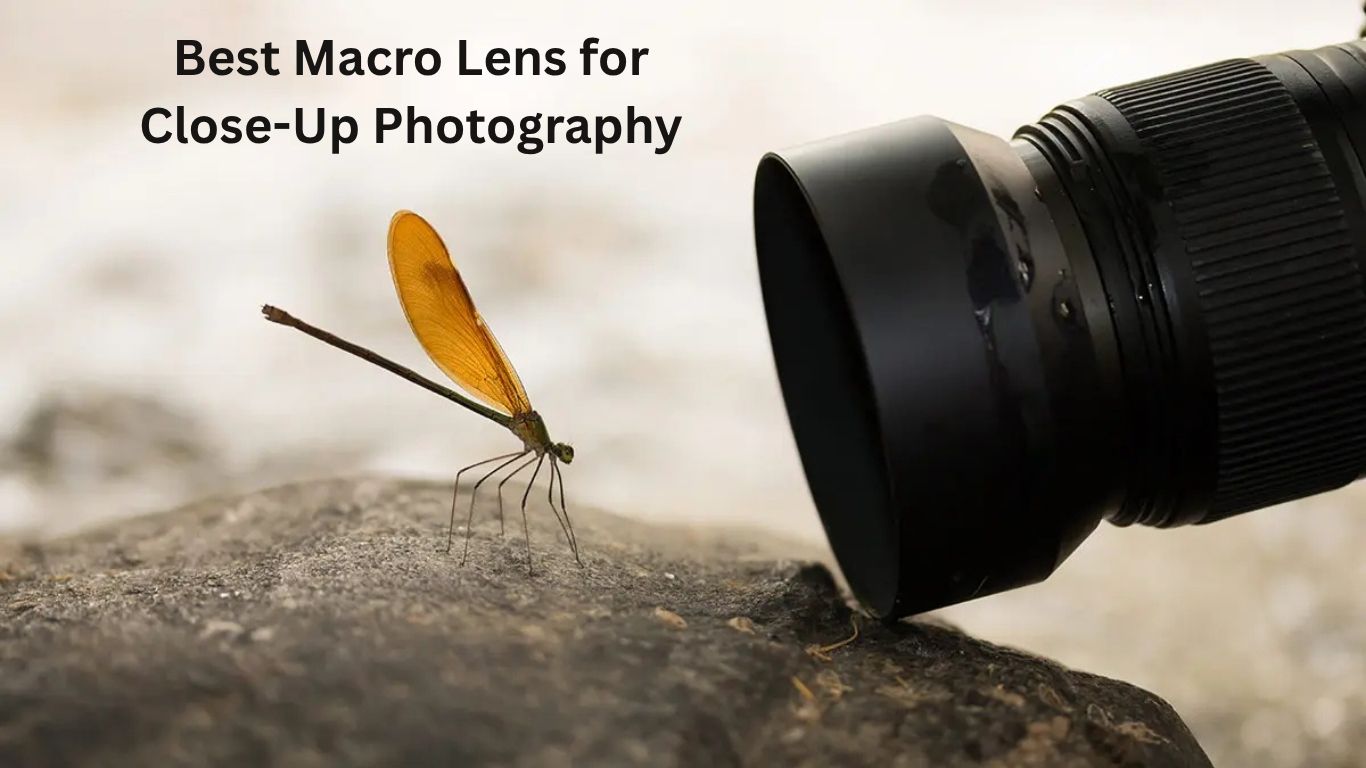
Have you ever tried to photograph a dewdrop on a petal, only to end up with a blurry, disappointing mess? Or struggled to capture the intricate texture of an insect’s wing? If so, you already know that standard lenses simply can’t cut it for true close-up photography. That’s exactly where the best macro lens for close-up photography becomes a game-changer. A dedicated macro lens opens up an entirely new world, one where tiny subjects fill the frame with breathtaking clarity. Whether you’re a nature photographer, a product shooter, or a food blogger, the right macro lens can transform your creative output completely.
In this guide, we’ll cover everything you need to know: what a macro lens actually is, why it matters, the key features to look for, and honest reviews of the top macro lenses available in market. By the end, you’ll know exactly which lens deserves a spot in your camera bag.
What Is a Macro Lens?
A macro lens is a specialised camera lens designed to photograph subjects at extremely close distances, rendering them at life-size (1:1) or greater magnification on the camera sensor. Unlike a standard lens, a macro lens can focus on subjects just centimetres away, revealing details invisible to the naked eye.
The term “macro” technically refers to a magnification ratio of 1:1 or higher, meaning the subject is projected onto the sensor at its actual real-world size. Some lenses marketed as “macro” offer only 1:2 (half-life-size) magnification, which is still useful for close-up work but isn’t true macro.
Macro vs. Close-Up Filters vs. Extension Tubes
| Feature | Macro Lens | Close-Up Filter | Extension Tube |
|---|---|---|---|
| Image Quality | Excellent | Moderate | Good |
| Autofocus | Yes | Yes | Sometimes |
| Magnification | 1:1 or higher | Varies | Varies |
| Cost | Higher | Low | Medium |
| Versatility | High | Low | Medium |
For serious close-up photography, a dedicated macro lens always delivers the best results.
Why a Macro Lens Matters for Close-Up Photography
You might wonder: Can’t I just crop my regular photos? You can, but the results will never match what a true macro lens produces. Here’s why a dedicated best macro lens for close-up photography matters:
- Sharpness at close range: Macro lenses are optically corrected specifically for close focus distances, delivering edge-to-edge sharpness that standard lenses cannot replicate.
- True magnification: A 1:1 macro ratio means you can fill the frame with a subject that’s only a few millimetres across.
- Reduced chromatic aberration: High-quality macro glass minimises colour fringing, essential when shooting fine details.
- Versatile focal length: Macro lenses double as excellent portrait, product, and general-purpose lenses.
- Better depth of field control: The compressed depth of field at macro distances creates beautiful background separation.
Common Use Cases for Macro Lenses:
- Nature and wildlife photography — insects, flowers, leaves, water droplets
- Product photography — jewellery, watches, electronics
- Food photography — textures, garnishes, plating details
- Scientific and medical imaging — specimens, skin, materials
- Art reproduction — capturing fine brushwork and textures
Top 8 Best Macro Lenses for Close-Up Photography
1. Canon RF 100mm f/2.8L Macro IS USM
Best for: Canon mirrorless shooters who want the ultimate macro experience.
The Canon RF 100mm f/2.8L is arguably the best macro lens for close-up photography on the market for Canon users. It features a groundbreaking 1.4x magnification (beyond life-size) and Canon’s Hybrid Image Stabiliser with up to 8 stops of correction when paired with in-body stabilisation.

Key Features:
- 1.4x maximum magnification (exceeds 1:1)
- Up to 8-stop hybrid image stabilisation.
- SA (Spherical Aberration) control ring for bokeh adjustment.
- Nano USM autofocus motor, fast and near-silent.
- Weather and dust-resistant construction.
- Minimum focus distance: 26cm (10.2 inches)
Pros:
- Industry-leading stabilisation for handheld macro shots.
- Unique SA ring gives creative bokeh control.
- Razor-sharp across the frame.
- Excellent dual-use as a portrait lens.
Cons:
- Premium price point (~$1,399)
- Only compatible with Canon RF mount.
- Heavier than non-L macro options.
Short Review: If you shoot Canon R-series mirrorless and want no compromises, this lens is the pinnacle of close-up photography glass. The SA control ring alone sets it apart from anything else on the market.
2. Nikon Z MC 105mm f/2.8 VR S
Best for: Nikon Z-mount users seeking professional-grade macro performance.
Nikon’s Z MC 105mm is a superb macro lens for close-up photography, featuring true 1:1 magnification, 5-stop VR stabilisation, and Nikon’s Nano Crystal Coat to eliminate ghosting and flare. It’s a benchmark lens in the Nikon ecosystem.

Key Features:
- True 1:1 life-size magnification.
- 5-stop Vibration Reduction (VR).
- Multi-Focus System with stepping motor for quiet, accurate AF.
- Weather-sealed construction.
- 105mm focal length — ideal working distance.
- Minimum focus distance: 29cm (11.4 inches)
Pros:
- Outstanding optical sharpness.
- Quiet AF ideal for video work.
- Excellent working distance keeps you from spooking subjects.
- Premium build quality.
Cons:
- Expensive (~$999)
- Only for Z-mount cameras.
- Relatively slow AF in some lighting conditions.
Short Review: A top-tier choice that competes directly with Canon’s best. The VR system is highly effective, and the image quality is pristine. One of the sharpest lenses Nikon has ever produced.
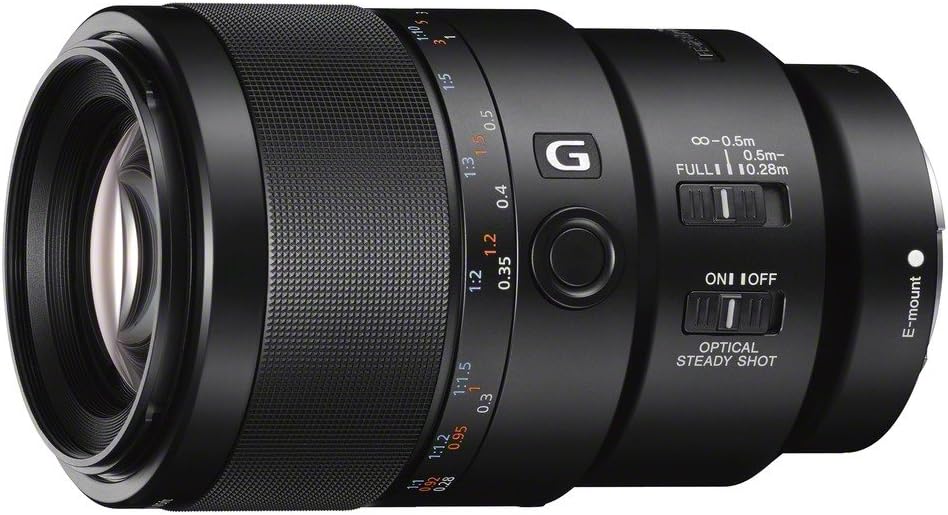
3. Sony FE 90mm f/2.8 Macro G OSS
Best for: Sony Alpha mirrorless photographers.
Sony’s G-series 90mm macro is a consistently excellent performer that has stood the test of time since 2015. It delivers true 1:1 magnification with Optical SteadyShot stabilisation and superb G-series optics.
Key Features:
- 1:1 true life-size magnification.
- Optical SteadyShot (OSS) image stabilisation.
- Fast Direct Drive SSM autofocus.
- Dust and moisture resistant.
- 90mm focal length with comfortable working distance.
- Smooth manual focus clutch.
Pros:
- Exceptional sharpness and clarity.
- OSS works well for handheld shooting.
- Beautiful, creamy bokeh.
- Reliable and consistent autofocus.
Cons:
- Ageing design compared to newer competitors.
- Pricey (~$1,098)
- Can hunt in low light.
Short Review: Despite its age, the Sony FE 90mm remains one of the best macro lenses for close-up photography in the Sony ecosystem. Optically, it’s still near flawless, and the build quality is excellent.
4. Tamron SP 90mm f/2.8 Di Macro VC USD (Model F017)
Best for: Budget-conscious photographers on Canon or Nikon F-mount.
Tamron’s 90mm macro has a long, celebrated history, and this generation is no exception. It offers outstanding optical quality, vibration compensation, and a competitive price that undercuts the major brands significantly.

Key Features:
- 1:1 life-size magnification.
- Vibration Compensation (VC) stabilisation.
- USD (Ultrasonic Silent Drive) AF motor.
- Moisture-resistant construction.
- Beautiful 9-blade rounded aperture diaphragm.
- Internal focusing design.
Pros:
- Superb image quality rivalling Canon and Nikon originals.
- Significantly more affordable (~$499)
- Vibration compensation is effective.
- Dual-use as a portrait lens with gorgeous bokeh.
Cons:
- AF can be slower than first-party lenses.
- Not available for mirrorless mounts natively.
- Build feels slightly less premium than Canon/Nikon L/S lenses.
Short Review: This is the best value macro lens on this list. Optical performance is nearly indistinguishable from lenses costing twice as much. A perfect choice for DSLR shooters who want quality without breaking the bank.
5. Sigma 105mm f/2.8 EX DG OS HSM Macro
Best for: Multi-platform shooters looking for excellent value.
Sigma’s 105mm macro is available for Canon EF, Nikon F, Sigma SA, and Sony A mounts, and delivers genuine 1:1 magnification with optical stabilisation and high-quality HSM autofocus.

Key Features:
- 1:1 true macro magnification.
- Optical Stabiliser (OS) — 4-stop compensation.
- HSM (Hyper Sonic Motor) autofocus.
- Super multi-layer coating for reduced flare.
- Robust build quality with a metal body.
- Minimum focus distance: 31.2cm (12.3 inches)
Pros:
- Available in multiple mounts.
- Excellent optical quality.
- Sturdy, well-built lens.
- Good working distance.
Cons:
- Older design, no mirrorless version.
- Slightly longer minimum focus distance.
- Heavier than some alternatives.
Short Review: A dependable, well-optically-corrected lens that punches above its price class. Ideal if you shoot multiple camera systems, as Sigma supports the widest range of mounts.
6. Laowa 100mm f/2.8 2X Ultra Macro APO
Best for: Photographers who want beyond life-size magnification.
The Laowa 100mm 2X is genuinely unique, it’s one of the few lenses that delivers 2:1 magnification (twice life-size) at an accessible price. It’s a fully manual lens, but the optical quality is extraordinary.

Key Features:
- 2:1 (2x life-size) maximum magnification.
- Apochromatic (APO) design — near-zero chromatic aberration.
- Available in Canon EF, Nikon F, Sony E, Nikon Z, Canon RF, L-mount.
- Float element design for sharpness at all focus distances.
- Robust all-metal build.
- Minimum focus distance: 19cm (7.5 inches)
Pros:
- Unmatched 2x magnification at the price.
- Incredibly sharp with minimal colour fringing.
- Wide mount compatibility, including mirrorless.
- Outstanding build quality for the price.
Cons:
- Fully manual focus only, no AF.
- No image stabilisation.
- Requires a tripod or very good technique for handheld use.
Short Review: If you crave extreme magnification and don’t mind manual focus, the Laowa 100mm 2X is extraordinary value. The APO design makes it one of the sharpest macro lenses in this price range, period.
7. Canon EF 100mm f/2.8L Macro IS USM
Best for: Canon DSLR users or those using Canon RF with an adapter.
The Canon EF 100mm L-series macro is one of the most beloved macro lenses ever made. Its Hybrid IS system, L-series build quality, and superb optics have made it a studio and field staple for over a decade.

Key Features:
- True 1:1 life-size magnification.
- Hybrid Image Stabiliser (corrects both shift and angular shake)
- L-series weather sealing.
- Ring-type USM autofocus, fast and accurate.
- 9-blade circular aperture.
- Minimum focus distance: 30cm (11.8 inches)
Pros:
- Legendary optical quality.
- Hybrid IS is highly effective for handheld macro.
- Dual use as a portrait lens.
- Robust L-series construction.
Cons:
- EF mount, designed for DSLRs.
- Showing its age vs. newer RF lenses.
- ~$999 — premium for an EF lens.
Short Review: Still an exceptional macro lens despite its age. If you’re on a Canon DSLR or using an adapter, the EF 100mm L is a safe, reliable investment that will serve you for years.
8. Nikon AF-S VR Micro-Nikkor 105mm f/2.8G IF-ED
Best for: Nikon F-mount DSLR photographers.
Nikon’s legendary 105mm micro-Nikkor is a cornerstone lens for close-up photography on F-mount DSLRs. True 1:1 magnification, VR stabilisation, and brilliant Silent Wave Motor autofocus make it a timeless classic.

Key Features:
- 1:1 life-size magnification.
- Vibration Reduction (VR) — 3-stop compensation.
- Silent Wave Motor (SWM) for fast, quiet AF.
- Nano Crystal Coat for flare suppression.
- Weather-sealed brass bayonet mount.
- Minimum focus distance: 31.4cm (12.4 inches)
Pros:
- Superb, time-proven optical quality.
- Reliable and consistent AF.
- Compatible with all Nikon F-mount DSLRs.
- Excellent build quality.
Cons:
- 3-stop VR is less competitive than newer lenses.
- Not compatible with Z-mount natively.
- Ageing design.
Short Review: An absolute classic. If you shoot Nikon DSLR, this is the macro lens to own. The image quality is still class-leading for F-mount glass, and it’s one of Nikon’s sharpest lenses ever produced.
Key Features to Consider Before Buying
Choosing the best macro lens for close-up photography isn’t just about picking the most expensive option. Here are the most important factors to evaluate:
1. Focal Length
Macro lenses come in three broad focal ranges:
- Short (30–60mm): Compact and affordable, but requires you to get very close to your subject, not ideal for live insects.
- Standard (90–105mm): The sweet spot for most photographers. Provides a comfortable working distance and excellent image quality.
- Telephoto (150–200mm): Maximum working distance; great for shy subjects like insects and reptiles. Heavier and pricier.
2. Magnification Ratio
Look for a 1:1 (life-size) magnification ratio as the minimum for true macro work. Some specialty lenses offer 2:1 or 5:1 for even greater magnification.
3. Autofocus Performance
Macro AF can be tricky because the depth of field is razor-thin. Look for:
- Fast, quiet AF motors (useful for video)
- Manual focus override (critical for precise composition)
- Focus limiter switches (speeds up AF by restricting the focus range)
4. Image Stabilisation
Camera shake is magnified dramatically at close distances. Built-in optical stabilisation (IS/VR/OSS) is a huge advantage for handheld close-up photography.
5. Build Quality and Weather Sealing
If you shoot outdoors, dust and weather resistance protect your investment. Metal barrel construction offers better durability than plastic.
6. Lens Mount Compatibility
Always verify that the lens matches your camera mount — Canon EF/RF, Nikon F/Z, Sony E, Fujifilm X, or Micro Four Thirds. Adapters are available but may compromise AF performance.
7. Maximum Aperture
A wide maximum aperture (f/2.8) is beneficial for:
- Low-light performance
- Shallow depth of field effects
- Faster AF acquisition
Macro Lens For Close-up Photography Buying Guide
Selecting the best macro lens for close-up photography ultimately depends on several practical factors. Here’s a step-by-step buying guide to help you decide.
Step 1: Identify Your Camera System
Always start with mount compatibility. The best lens in the world is useless if it doesn’t fit your camera. Mirrorless shooters should prioritise native mirrorless-mount lenses for the best AF performance.
Step 2: Define Your Primary Subjects
- Flowers and product photography: Any focal length works, standard 90–105mm is ideal
- Insects and skittish subjects: Choose 100mm+ for maximum working distance
- Scientific/extreme close-ups: Consider the Laowa 2X or extension tubes
Step 3: Set Your Budget
| Budget Range | Recommended Options |
|---|---|
| Under $300 | Used Tamron 90mm, third-party extension tubes |
| $300–$600 | Tamron SP 90mm, Sigma 105mm |
| $600–$1,000 | Nikon 105mm VR, Canon EF 100mm L |
| $1,000+ | Canon RF 100mm, Nikon Z MC 105mm, Sony FE 90mm |
Step 4: Decide on Autofocus vs. Manual Focus
If you photograph moving subjects (insects, small animals), reliable autofocus is essential. For static subjects (products, food, flowers on a tripod), manual focus lenses like the Laowa are perfectly practical and can save significant money.
Step 5: Consider Image Stabilisation
Handheld macro photography is extremely challenging without stabilisation. If you often shoot without a tripod, prioritise lenses with effective IS/VR/OSS systems.
Step 6: Think Long-Term
Macro lenses are excellent general-purpose lenses too. A 90–105mm macro doubles as a superb portrait lens, making it one of the most versatile investments in your kit.
Common Mistakes to Avoid in Macro Photography
Even with the best macro lens for close-up photography, beginners often make these avoidable mistakes:
- Shooting wide open: At macro distances, f/2.8 gives a razor-thin depth of field — often less than 1mm. Use f/8–f/16 for sufficient sharpness.
- Ignoring focus stacking: For maximum depth of field, shoot multiple frames at different focus points and blend them in post (Photoshop, Helicon Focus).
- Not using a tripod: Even with IS, handheld macro at 1:1 leads to blur. A sturdy tripod and remote shutter release are essential for critical sharpness.
- Poor lighting setup: A ring flash or twin flash provides controlled, shadow-free lighting essential for macro work.
- Forgetting working distance: Getting too close to your subject (especially live insects) will cause them to flee. Choose a longer focal length if this is a problem.
- Neglecting background: Busy backgrounds ruin macro shots. Look for clean, simple backgrounds or use a wide aperture to blur them.
Conclusion
Finding the best macro lens for close-up photography doesn’t have to be overwhelming. Once you understand what to look for, focal length, magnification ratio, stabilisation, and mount compatibility- the right choice becomes much clearer. The key takeaways are simple. A true 1:1 macro lens will always outperform filters, extensions, or cropping for close-up work. A 90–105mm focal length suits most photographers beautifully, offering a comfortable working distance and stunning image quality. And if budget is a concern, third-party options deliver remarkable performance at a fraction of first-party prices.
Most importantly, remember that the best macro lens for close-up photography is the one that fits your camera system, your shooting style, and your budget, not necessarily the most expensive one on the shelf. The tiny world around you is full of breathtaking detail just waiting to be discovered. A great macro lens is your ticket in.
People Also Ask
Q1: What is the best macro lens for close-up photography?
The best macro lens depends on your camera system, but the Canon RF 100mm f/2.8L and Nikon Z MC 105mm are top-rated choices overall.
Q2: Do I need a special lens for close-up photography?
Yes. A dedicated macro lens with 1:1 magnification delivers sharpness and detail that standard lenses simply cannot achieve at close focus distances.
Q3: What focal length is best for macro photography?
The 90–105mm range offers the ideal balance of working distance, image quality, and versatility, making it perfect for most close-up photography needs.
Q4: Is image stabilisation important in a macro lens?
Absolutely. At 1:1 magnification, even tiny camera movements cause blur. Image stabilisation significantly improves handheld close-up photography results in real-world conditions.
Q5: Can a macro lens be used for portrait photography?
Yes. A 100mm macro lens doubles as an excellent portrait lens, delivering beautiful background blur, flattering compression, and outstanding sharpness on facial details.